

Sleep

We all know that sleep is vital for our bodies to heal and our minds to stay sharp. However, for those navigating the complexities of FOP or POH, achieving that rest is a unique struggle.
The physical realities of limited mobility and persistent pain often stand in the way of comfort, while respiratory challenges, such as restricted chest expansion or narrowed airways, can make breathing during sleep feel like an added effort.
This often means that ‘rest’ involves more than just a comfortable mattress; it may require diagnostic tools like sleep studies to monitor oxygen levels, and for some, the use of specialised equipment like CPAP machines to ensure breathing remains stable throughout the night.
Understanding these hurdles is the first step toward reclaiming the rest your body needs to manage these conditions.
If you have any concerns about the quality or comfort of your sleep, you should speak to your doctor or healthcare professional.
sleepeducation.org
Cozy Critters Podcast
Sleep and Therapy Services
The Sleep Charity
1. The Sleep Apnoea Trust (SATA)
This is the leading UK charity managed by patients, for patients. They provide straightforward information on living with sleep apnoea and navigating the NHS sleep service.
-
Best for: General patient advocacy and understanding your rights as a patient.
-
Website: sleep-apnoea-trust.org
2. Hope2Sleep Charity
This charity is widely praised in the UK for its practical, hands-on advice. They offer a “comfort shop” with accessories (like hose lifts and soft strap covers) and provide detailed “desensitisation” tips for people who struggle with the feeling of the mask.
-
Best for: Practical tips on mask comfort and overcoming the “claustrophobic” feeling of starting treatment.
-
Website: hope2sleep.co.uk
3. British Snoring & Sleep Apnoea Association (BSSAA)
A long-standing authority in the UK, they offer a comprehensive “Resource Hub” with articles, videos, and guides on both snoring and sleep apnoea treatments.
-
Best for: Clear explanations of how different machines work and troubleshooting common setup issues.
-
Website: britishsnoring.co.uk
5. The Sleep Charity (National Sleep Helpline)
While they cover all aspects of sleep (including insomnia and hygiene), they run a National Sleep Helpline where you can speak to trained advisors about the emotional and practical difficulties of disrupted sleep.
-
Best for: Speaking to a human being if the frustration of sleep struggles is impacting your mental health.
-
Website: thesleepcharity.org.uk
Understanding Sleep Support Equipment
Your Healthcare Professional (HCP) may have discussed using a CPAP or BiPAP machine with you.
A CPAP (Continuous Positive Airway Pressure) machine is a device that uses a gentle stream of air to keep your airways open while you sleep.
For some, a BiPAP (Bilevel Positive Airway Pressure) machine may be recommended instead, as it adjusts the pressure to make breathing out easier if your chest wall movement is restricted.
While adjusting to wearing a mask can take a little time and patience, these tools are vital for ensuring your body gets the oxygen it needs to recover overnight.
To help you get started or troubleshoot any discomfort, here are some helpful websites and resources to support you:

NHS England: Easy Read Guide to CPAP
For a very clear, visual, and simple-to-follow guide on how to use and clean your machine, the NHS has an “Easy Read” version which is excellent for a quick reference.
Visit: NHS England – A Guide to Your CPAP (PDF)
Asthma + Lung UK
Asthma + Lung UK provide a comprehensive guide to Continuous Positive Airway Pressure (CPAP) therapy, covering everything from how the machines work to practical advice for daily use. It is structured as an educational resource that includes troubleshooting tips for side effects, maintenance instructions, and guidance on traveling with the equipment..
Visit: Asthma + Lung UK
Parent Project Muscular Dystrophy
Parent Project Muscular Dystrophy has created an educational video that explains the differences between CPAP and BiPAP machines. Although the focus is onhow they support individuals with Duchenne muscular dystrophy during sleep, those with FOP or POH may still find the explanations useful.
The video offers practical advice for transitioning to these therapies, emphasizing the importance of finding the right mask and working closely with a pulmonary team to improve energy levels and overall heart and lung function.
Watch: Parent Project
An Introduction for Children
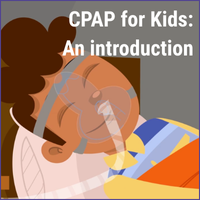
AASM Sleep Education has developed a child-friendly video that uses encouraging language and relatable analogies to help young patients feel comfortable and confident using their CPAP machines.
The video features a step-by-step “practice” guide that builds familiarity through short daily sessions and relaxation techniques, framing consistent sleep therapy as a way for kids to have more energy for school and sports.
This video is helpful if your child needs reassurance about wearing a mask.
Watch: AASM